top of page
ECO-DYE TEXTILE ART
AND INDIGO DYE


THE BOUNDLES ARE IN THE BATH

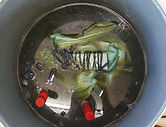
TOOLS FOR TIE-AND-DYE


MOTIVATIONS MADE WITH ECO-DYE
I learned PLANT DYEING with Fabienne Ray in the south of France. She herself learned these techniques from India Flint, an Australian textile artist who creates magnificent works with eucalyptus leaves.
Plant dyeing, or "eco-dyeing," is a process where leaves, flowers, and other plant materials are used as a color source in the dye bath. So many leaves and flowers produce fantastic colors!
Before putting the fabric in the bath, it will be folded in various ways; where parts are hidden, they will remain white. You can find many different techniques online.
Eco-dyeing is India Flint's specialty. Once the leaves are positioned on the fabric, the fabric is tightly wrapped around a stick and immersed in a bath of simmering plants. The impressions left on the fabric are due to the tannins in the leaves. Some leaves, like eucalyptus, create magical patterns on the fabric, and the colors depend on several factors such as the mordanting of the fabric (opening the fibers), the metal of the vat, etc.
Currently, I really enjoy using plant-based dyes in conjunction with my screen-printed images. Working with natural dyes creates a direct connection WITH NATURE. There are always surprises; nature speaks to us.
Indigo and pastel dyeing are very different, but equally magical!
When the fabric is removed from the vat, it comes into contact with oxygen in the air and the color changes from yellow-green to these wonderful shades of blue.
I created collections using PASTEL for the company TERRE DE PASTEL.
Wonderful textile artists use this natural dyeing technique:
Lotta Helleberg
India Flint


DYEING WITH PASTEL BLUE
bottom of page